
Tinggalkan pesan
Jika Anda tertarik dengan produk kami dan ingin mengetahui detail lebih lanjut, silakan tinggalkan pesan di sini, kami akan membalas Anda sesegera mungkin.

Every winter, we get two common questions from buyers in Canada, Northern Europe, and the Northern US: Will WPC decking crack at -30°C? And will shoveling snow scratch the surface?
Here is the quick answer: High-quality co-extrusion WPC decking typically handles temperatures from -40°C to +80°C, passes 50 freeze-thaw cycles at -20°C without cracking, and has a 24-hour water absorption rate of roughly 0.5%–1% (complying with the GB/T 24508 standard for non-foamed boards). It doesn't actually fear the cold; it fears water freezing inside the core and the wrong shovel in your hand.
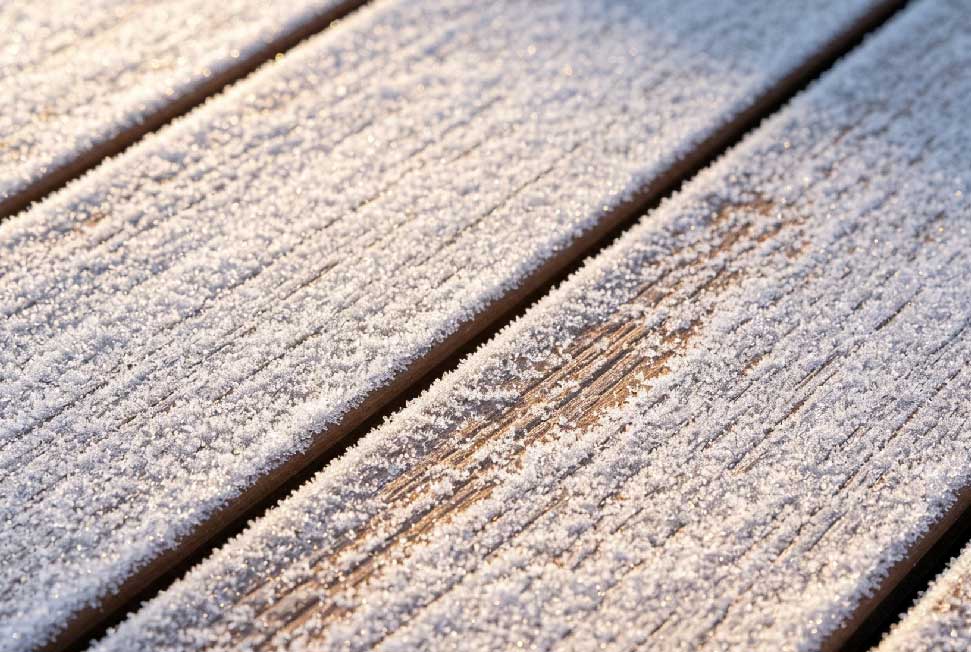
Truth 1: Why It Won't Crack (If Installed Correctly)
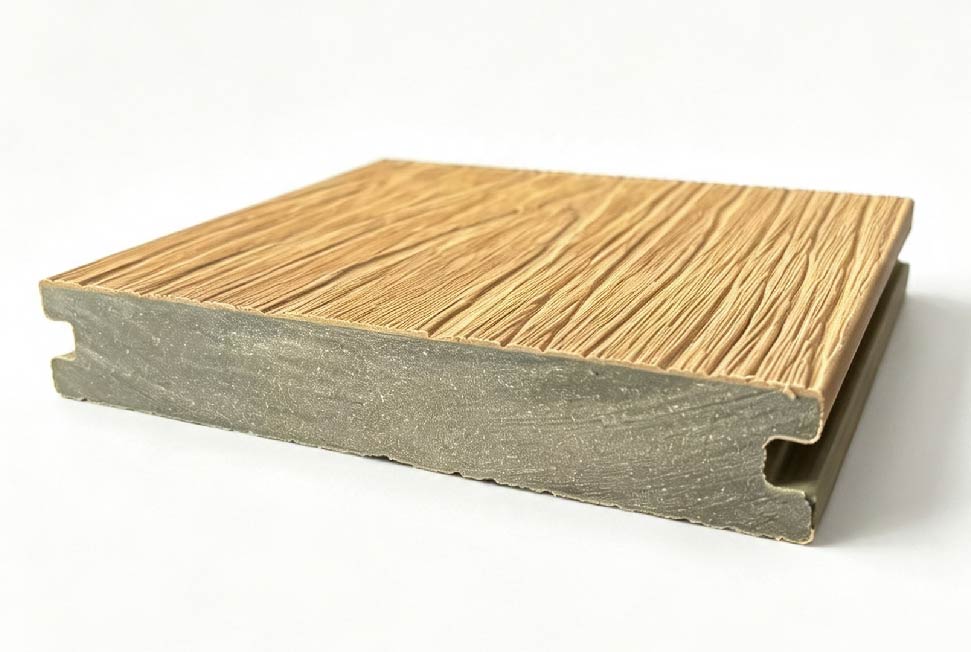
The physics of freeze-thaw damage is simple: water seeps into the material, expands by 9% when freezing, and cracks the board from the inside. Co-extruded boards stop this at the source. The 360° ASA polymer cap (1–2mm) and closed-cell core reduce water absorption to around 0.5%, blocking moisture.
However, three weak points remain on the jobsite:
Winter Installation Tip: Boards shrink in cold weather. Keep expansion gaps at the larger end of the 5–8mm range. For continuous runs over 6 meters, add a transition strip. In extreme cold, solid WPC boards are preferred over hollow ones, as hollow walls are more prone to internal stress cracking.
Truth 2: Shoveling Without Ruining the Surface
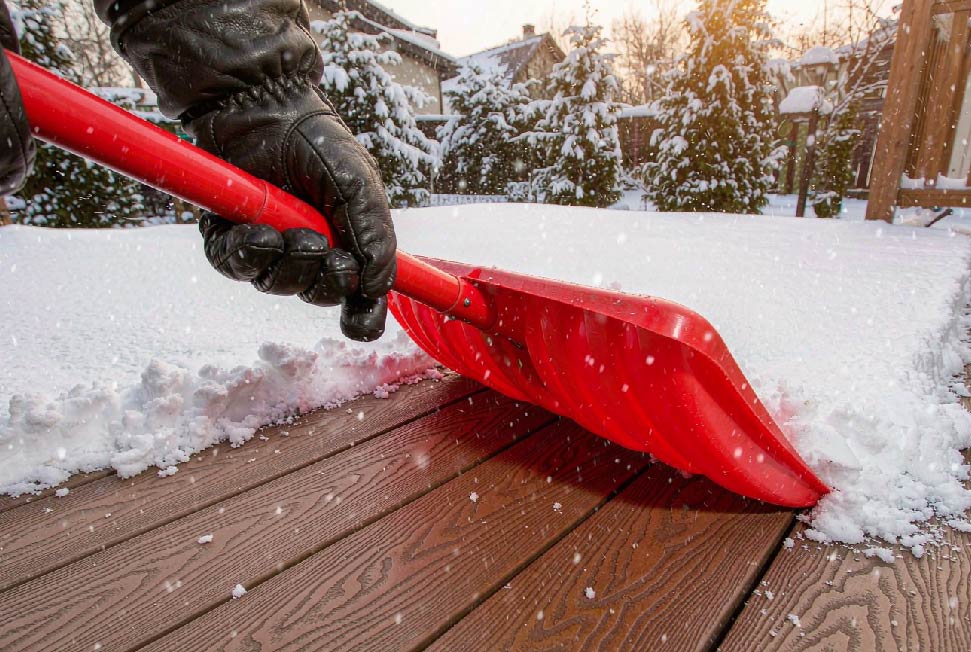
Light snow can be swept with a stiff broom or leaf blower. For heavy snow, use a plastic snow shovel or rubber squeegee. Always push along the direction of the boards, never sideways. Pushing sideways catches the shovel edge in the 5mm gaps and rips up the board edges.
Watch out: Many "plastic" shovels have a metal wear strip at the bottom—that steel edge is a scraper. Never use all-metal shovels, steel spades, or ice picks. The co-extruded cap is a finish, not armor. Once scratched through, it cannot be sanded or repainted. If ice has formed, apply de-icing salt and wait for it to loosen; never chip at it.
Truth 3: The Right De-Icing Salt (And What to Avoid)
Wrong chemicals can damage the deck more than the snow.
Recommended: Calcium chloride (effective down to -25°C, leaves little residue). For pet owners, magnesium chloride-based formulas are safer.
Use with caution: Rock salt (sodium chloride). It works slowly in extreme cold and leaves white residue. Wash it off with clean water once the snow melts.
Never use: Colored de-icers (dyes stain the grain permanently) or abrasive grit/sand (it acts like sandpaper underfoot and clogs drainage gaps).
Winter Care Checklist:
Before winter, clear leaves from the gaps and ensure drainage is clear. Do not wax WPC decking—it clogs the slip-resistant texture and attracts dirt. Never use a pressure washer on a frozen deck. Monthly, check that clips and screws are tight, and inspect edge trims. If end caps or sealant peel off, repair them before the next deep freeze.
Conclusion: WPC decking can handle the cold. What it can't handle is skipped steps: unsealed ends, zero expansion gaps, and a metal shovel. Keep water out of the core, let the boards expand, and use a plastic shovel—your deck will survive decades of freezing winters.